2026 Stress Processing Journal: Your Customizable, Print-Ready Tool for Calmer, Clearer Days
Life in 2026 won’t slow down—and neither should your capacity to respond thoughtfully to stress. The 2026 Stress Processing Journal is more than a planner or coloring book. It’s a purpose-built, evidence-informed toolkit designed for adults who want to move beyond surface-level coping and build lasting resilience—without adding hours of setup or guesswork to their already full plates.
Many people face overlapping pressures: demanding workloads, shifting personal responsibilities, financial uncertainty, or the quiet weight of long-term emotional fatigue. Traditional journals often fall short—not because they lack intention, but because they lack structure, flexibility, and psychological grounding. You might start strong in January, only to abandon your journal by March when pages feel irrelevant, overly prescriptive, or disconnected from how stress *actually shows up* in your body and thoughts.
That’s where the 2026 Stress Processing Journal steps in—not as another task on your list, but as a responsive partner in your well-being journey. It meets you where you are: whether you’re new to self-reflection, returning after burnout, or seeking deeper integration between your daily habits and long-term mental health goals.
How This Journal Helps You Process—Not Just Record—Stress
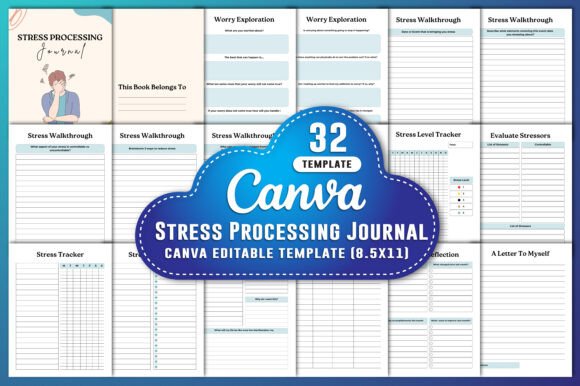
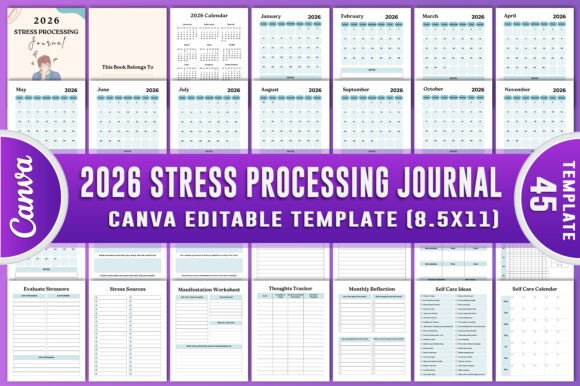
Unlike generic planners, this resource centers *processing*: helping you identify triggers, examine thought patterns, evaluate responses, and gently redirect energy toward restoration. Its 45-page layout isn’t arbitrary—it’s sequenced to mirror how stress unfolds and resolves:
- Worry Exploration and Stress Walkthrough pages guide you through naming vague unease before it escalates—turning “I’m overwhelmed” into “This deadline + lack of sleep + unspoken boundary = my current stress signature.”
- The Problem Solving and Stress Level Tracker sections support actionable reflection—not just logging intensity, but mapping context (time of day, physical cues, recent interactions) so patterns become visible and changeable.
- Thoughts Tracker and A Letter To Myself invite compassionate self-dialogue—especially valuable during moments of self-criticism or decision fatigue.
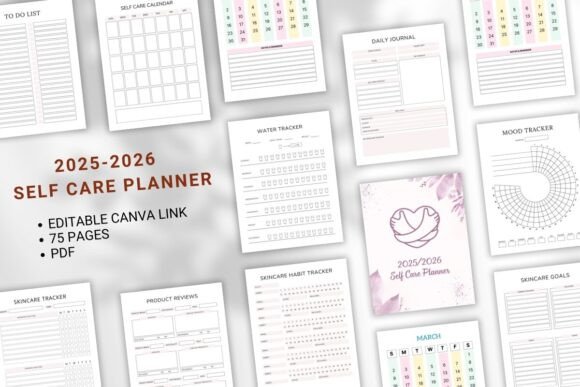
- Daily Gratitude, Self-Care Calendar, and Stress Relief Coloring Pages offer micro-moments of regulation that fit into even the most fragmented schedules.
Each page serves a functional role—not filler. And because every element is 100% customizable in Canva, you’re never locked into someone else’s definitions of “self-care” or “success.” You decide what counts as progress. You choose which trackers resonate—and which ones to skip entirely.
Real-World Use: From Morning Clarity to End-of-Day Reset
Imagine starting your day with just five minutes using the Monthly Reflection and Daily Habit Tracker. You notice that three days in a row, your “energy dip” aligns with skipped hydration—and not, as you assumed, with workload. That small insight shifts your next week’s strategy.
Or picture using the Stress Sources Manifestation Worksheet midweek, when frustration builds over recurring team miscommunications. Instead of venting or withdrawing, you name the root need (“clarity around roles”) and draft one low-stakes request to make—transforming reactivity into relational intention.
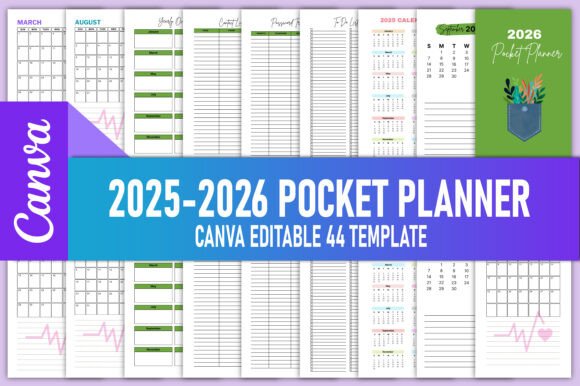
For caregivers, the My Bucket List Notes and Thank You Files pages become anchors—reminding you that your identity extends beyond duty. For entrepreneurs, the Weekly Journal To Do List and 2025–2026 Calendar help separate urgent tasks from meaningful priorities—reducing the chronic “always-on” feeling.
And yes—the Stress Relief Coloring Pages aren’t just decorative. Research confirms that structured, repetitive visual activity lowers cortisol and activates the parasympathetic nervous system. These aren’t childlike doodles; they’re intentionally designed, adult-friendly illustrations that give your mind space to settle—no artistic skill required.
Why Editable Canva + Print-Ready Files Make All the Difference
You don’t need design skills—or extra software—to personalize your experience. With the included Editable Canva Link, you can adjust fonts, colors, prompts, or even swap entire pages to match your voice, values, or evolving needs. Prefer bullet points over paragraphs? Change it. Want your company logo on the cover for team wellness initiatives? Done. Need larger text for accessibility? Easy.
When you’re ready to print, you’ll get high-resolution, 300 DPI PDF, JPG, and PNG files—all sized precisely to 8.5 x 11 inches, no bleed, fully print-ready. No pixelation. No formatting surprises at the copy shop. No waiting for shipping. Download, customize, print—and begin today.
This dual-format approach saves time *and* money: no subscriptions, no per-page fees, no hidden costs. You own the file outright. Use it once. Use it for years. Share adapted versions with your therapy clients, coaching group, or wellness workshop—ethically and efficiently.
Tailoring the 2026 Stress Processing Journal to *Your* Rhythm
There’s no “right” way to use this journal—only what works for *you*. Some users open it first thing, treating it like a grounding ritual. Others keep it on their desk and turn to specific pages only when stress spikes—like reaching for a trusted tool from a well-organized toolbox.
If you thrive on routine, lean into the Monthly Planner and Daily Gratitude sections consistently. If structure feels restrictive, start with just two pages: the Stress Level Tracker and Self Care Ideas. Build from there.
Teens, remote workers, healthcare professionals, and neurodivergent adults have all found value in its adaptable framework—because it doesn’t assume your stress looks like anyone else’s. It assumes you’re capable, worthy of support, and deserving of tools that respect your time, energy, and autonomy.
Ultimately, the 2026 Stress Processing Journal isn’t about eliminating stress—it’s about changing your relationship with it. It invites curiosity over judgment, agency over resignation, and gentle consistency over perfection. When you download, you’re not just getting 45 pages. You’re claiming permission to pause, process, and proceed—with more clarity, compassion, and calm.