Non-Verbal Communication Cards Workbook
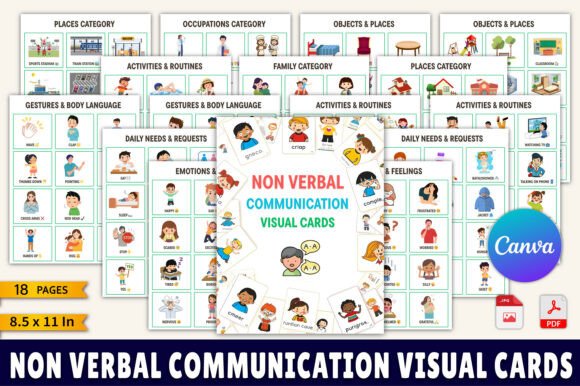
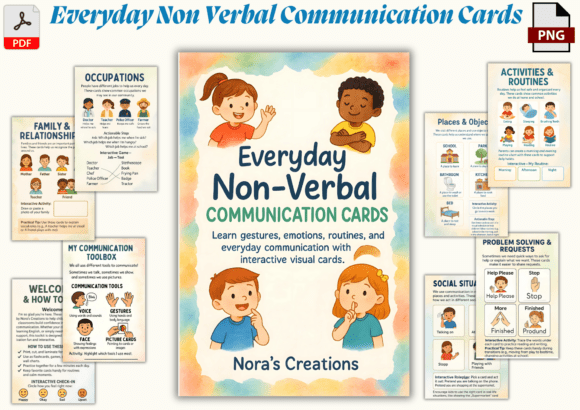
The Non-Verbal Communication Cards Workbook is a versatile and engaging tool designed to help children and adults alike develop essential communication skills through visual learning. Created by Nora’s Creations, this 18-page workbook is a valuable resource for families, educators, therapists, and anyone looking to support emotional and social development in young learners.
What Makes This Workbook Stand Out?
This workbook isn’t just another educational resource—it’s an interactive toolkit that brings learning to life. With its colorful illustrations, printable flashcards, and structured activities, it offers a hands-on approach to teaching non-verbal communication. The design is both child-friendly and professional, making it suitable for use in homes, classrooms, and therapy settings.
The Non-Verbal Communication Cards Workbook includes a variety of features that cater to different learning styles and needs. Visual flashcards are ideal for helping children recognize and express emotions through illustrated faces. Reflection prompts encourage self-awareness and emotional intelligence, while routine charts provide structure and predictability for daily activities.
Additionally, the workbook includes fun games like “Guess the Gesture” and “Emotion Match,” which make learning feel like play. These interactive elements not only keep children engaged but also reinforce key concepts through repetition and practice. By using these cards, kids can build confidence in expressing themselves without the pressure of verbal language.
Practical Applications Across Multiple Settings
The Non-Verbal Communication Cards Workbook is incredibly adaptable, making it a valuable asset in various environments. In a classroom setting, teachers can use the cards to support speech therapy sessions or integrate them into lessons on social skills and emotional regulation. For homeschooling parents, the workbook offers a structured yet flexible way to teach communication concepts at home.
In therapeutic contexts, the workbook supports special needs education and ESL learning by providing visual aids that bridge language gaps. It’s also beneficial for early childhood education, where visual learning plays a crucial role in cognitive and social development. Families can use the cards during bonding activities, helping children understand and express their feelings in a safe and supportive environment.
For professionals such as speech therapists and educators, the Non-Verbal Communication Cards Workbook serves as a practical tool that enhances engagement and effectiveness. Its digital formats (PDF and PNG) allow for easy printing and customization, making it accessible for both in-person and remote sessions. The inclusion of a Certificate of Communication adds a sense of accomplishment and motivation for young learners.
Why Choose This Workbook Over Others?
One of the standout qualities of the Non-Verbal Communication Cards Workbook is its focus on simplicity and accessibility. Unlike some educational tools that can be overwhelming, this workbook is designed with the user in mind. The clear layout, vibrant visuals, and straightforward instructions make it easy for children and adults to navigate and use independently.
The workbook’s emphasis on non-verbal communication aligns with modern educational trends that prioritize holistic development. By incorporating visual and kinesthetic learning strategies, it helps children who may struggle with traditional verbal methods. This makes it especially useful for those with autism spectrum disorder, developmental delays, or language barriers.
Moreover, the Non-Verbal Communication Cards Workbook encourages creativity and critical thinking. Through activities like matching gestures to emotions or creating visual schedules, children learn to think visually and communicate more effectively. These skills are transferable to everyday situations, from school to home to social interactions.
Real-World Use Cases and Recommendations
Imagine a scenario where a child is struggling to express their needs in a classroom setting. A teacher could use the Non-Verbal Communication Cards Workbook to introduce a visual schedule that outlines the day’s activities. This not only helps the child feel more secure but also teaches them how to anticipate and participate in routines.
Another example involves a family working on improving communication at home. Parents can use the flashcards to help their child identify and label emotions, fostering a deeper understanding of feelings and reactions. This can lead to better conflict resolution and stronger family bonds.
For therapists, the workbook provides a ready-made set of tools that can be used in individual or group sessions. The included games and reflection prompts offer a range of activities that can be tailored to the specific needs of each child. This flexibility ensures that the Non-Verbal Communication Cards Workbook remains relevant and effective across different therapeutic approaches.
Conclusion: A Tool That Works for Everyone
The Non-Verbal Communication Cards Workbook is more than just a collection of flashcards—it’s a comprehensive toolkit that empowers children to communicate more confidently and effectively. Whether used in a classroom, at home, or in therapy, it offers a structured yet playful way to explore emotions, gestures, and social interactions.
With its practical applications, engaging design, and adaptability, the Non-Verbal Communication Cards Workbook is an excellent choice for educators, parents, and therapists looking to support children’s communication development. It’s a resource that bridges the gap between learning and real-world application, making it a valuable addition to any educational or therapeutic toolkit.